



If you’re already eating whole foods, exercising regularly, and watching your portions, then you’re on your way to a successful weight loss plan. But there’s one thing that many people often overlook in their weight loss journey……….and that’s protein. The majority of weight loss recommendations treat protein as just a checklist item, somewhere beneath calorie counting and cardio. But protein intake is a key factor that makes your results sustainable. That’s because protein plays the important dual role of keeping you fuller for longer while also protecting the lean muscle your body would otherwise burn as you cut calories. The scientific explanation for this is fairly straightforward. Research by (Leidy et al. in 2015), showed that having a diet that is protein-rich would lead to feeling fuller and reduce spontaneous calorie intake compared to diets higher in carbs and fat. A portion of this can be attributed to the effect of protein on hunger hormones. It blunts ghrelin, the hormone that signals hunger better than carbs and fat. The other aspect of this is muscle preservation. When you lose weight without enough protein, you risk losing muscle along with the fat. That muscle tissue is not only important for daily functioning but it’s also one of the major drivers of metabolism.
So how much protein do you need? It depends upon your lifestyle and activity level but somewhere between 1.2 and 1.6 grams of protein per kilogram of body weight per day is a good benchmark. So, as an example, a person weighing about 150lbs would be targeting between 80-110gms of protein spread throughout the day.
And if you’re like many of the people in the PlantFusion community, you try to get as much of that protein from plant-based sources as possible. That’s why we put together a few simple tips to help you. Read on!
1. Plant-Based Foods for High Protein Diets
Creating a plant-based, high-protein diet isn’t about switching one processed food for another. It’s about knowing which whole foods pack the kind of protein punch that can deliver real results. Lentils and chickpeas top the chart with about 18 grams of protein and 15 or more grams of fiber per cooked cup. Edamame is another complete plant based protein source that’s not far behind, offering 17 grams per cup. There are a number of grains worth mentioning as well. Quinoa contains 8 grams of protein per cooked cup. While not the highest in terms of potency, it is a complete protein, containing all 9 essential amino acids. This is a unique trait among plant foods and an important one if you're trying to substitute animal protein.
Tempeh and tofu complete the category, with tempeh clocking in at approximately 31 grams per cup, due to fermentation, and/or the concentration of soy. When properly prepared, a vegetable-based protein can be delicious and very filling. The vegetable protein is built around a base of fiber that tends to help you feel more satisfied. As a result, you can end up eating fewer total calories.
2. Protein and Fiber Diet Benefits
When it comes to weight reduction, consuming protein and fiber together offers some unique benefits. Protein slows gastric emptying while also sending hormonal signals of fullness. Meanwhile, fiber also helps fight hunger urges, but in a different way. It adds to the bulk in the gut, and slows digestion and gut transit.
The research directly supports this assertion. A weight-loss diet containing 36% of energy from beans and 839% more fiber than the control diet Turner et al (2013) was associated with significantly less hunger. In addition, the high-fiber diet was better adhered to than a lower-fiber control. To be clear, we’re not suggesting you start eating only beans for a third of your meals. The important takeaway is that when you get most of your protein from plant based sources, in almost all cases, you are automatically getting a significant serving of fiber at the same time with all of the added benefits of consuming both together.
3. Protein Powder Stacking for Weight Loss
If you’re one of those serious people who wants to take your game up a notch, there’s something called “protein stacking” that you’ll want to understand. The goal in protein stacking is to try to maintain a steady stream of protein throughout the day for better recovery and hunger management. You accomplish this by combining two or three different protein sources with different absorption rates to extend the effects of the protein across a longer time window. While it sounds easy, this can be a real chore. Between the shopping, meal prep, and planning there’s considerable cost and energy involved. But this is where supplements can provide an easier way.
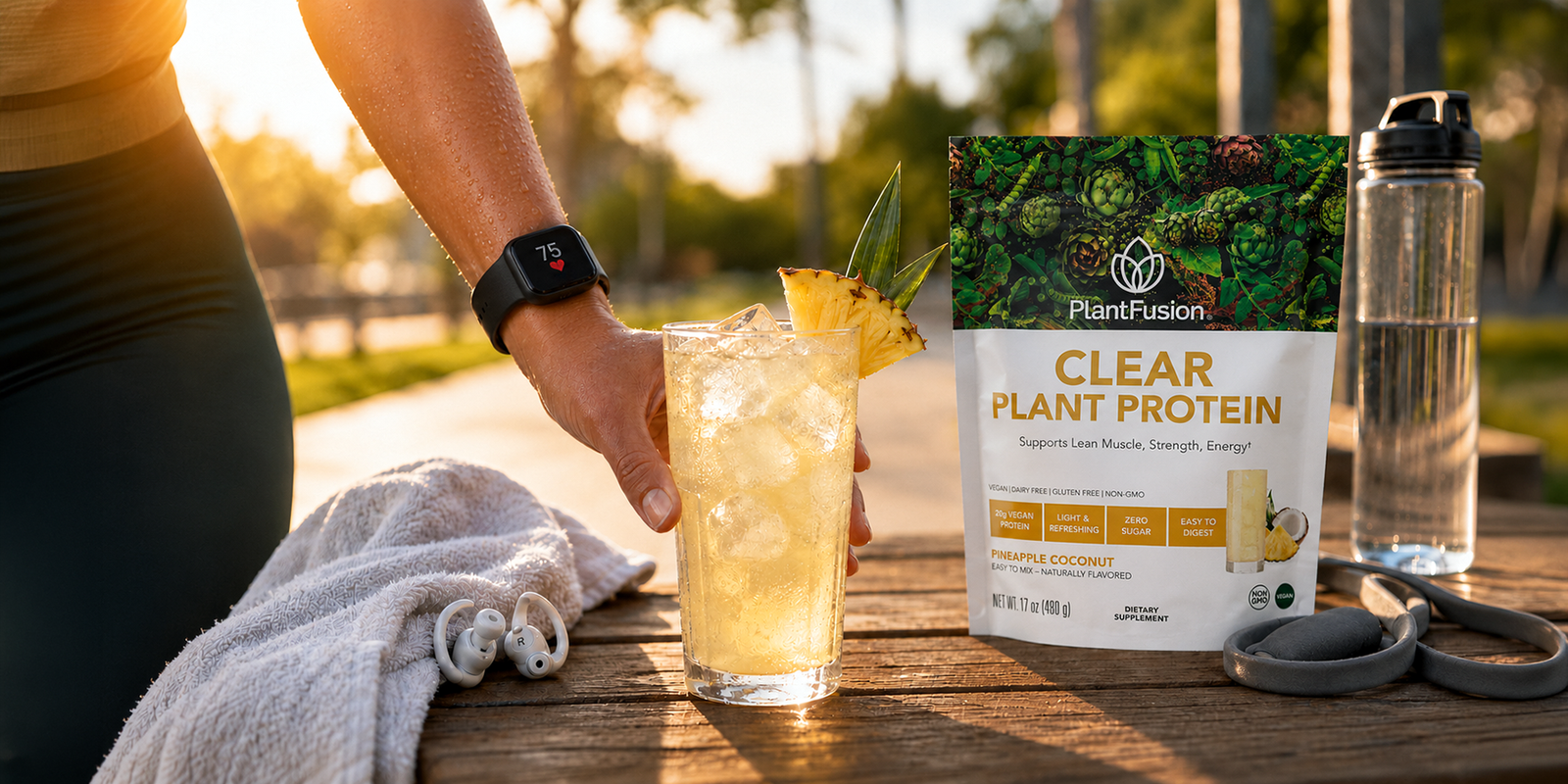
As an example, our PlantFusion Complete Protein is made from whole peas, artichoke, quinoa, and amaranth. These are intact, whole-food protein sources that your body has to break down piece by piece, the same way it would digest a meal. That slower breakdown extends the release of amino acids over a longer period. PlantFusion Clear Protein, on the other hand, uses hydrolyzed pea peptides. These are proteins that have already been broken into smaller fragments which allows them to absorb faster so that they hit the bloodstream sooner.
The term “stacking” simple means that you take these two different proteins together at the same time. So literally you would use one scoop of the Complete Protein and one scoop of the Clear Protein in the same shaker (the vanilla and pineapple coconut are an amazing combo). Stacking the two means you get a short-term rise in amino acids from the Clear Protein, followed by the slower, more continuous surge from the Complete Protein. This gives you a sustained release effect over many hours which is ideal for bridging those long spans between lunch and dinner.
If you’re interested in learning about protein stacking or trying it out for yourself, you’ll want to take a look at the Clear + Complete Protein Stacking Bundle which has everything you need to get started.

4. High Protein Snacks for Weight Loss
Nothing threatens a high protein diet like snacking. Let’s face it, the vast majority of what falls into the snack category is generally made from refined carbs. But don’t worry, we’ve been in that same spot, which is why we’re sharing our own secret high protein snacks with you.
Making a few simple swaps can have an enormous impact without changing your current habits too much. Roasted chickpeas have approximately 6 grams of protein per half-cup. They are shelf-stable, easily portioned into small containers for the week. Cooking them in an air frying with very light oil can turn them into a delicious crunchy snack. A hard-boiled egg with a handful of edamame lands you in double digits in less than five minutes of prep time. Cottage cheese with berries is an oldie but a goodie, yet it's underappreciated simply because people don't realize that the half-cup serving comes along with 12 to 14 grams of protein paired with some serious fiber for volume.
But if you want something yummy that you’ll look forward to, protein-infused baked snacks can be the ultimate on-the-go power food. These baked chocolate chip cereal bars are made with PlantFusion protein, which is what makes them both incredibly delicious but also contribute a significant part of your daily protein quota. And also helps satisfy those cravings for sweets that we all experience.
5. Practical and Cheap Protein Sources
While all of these tips sound great, eating more protein comes at a cost – literally. Higher quality foods are more expensive, however, there are some simple ways to save. Again, this is where plant-based sources of protein can actually help. Two of the least costly sources are lentils and beans. Both of them typically fall before $2 a pound when you buy in larger quantities. That’s less than one-sixth the per-gram cost of most meat types while also remaining shelf stable for months instead of days.
Peanut butter also gets overlooked but has about 7 grams of protein in two tablespoons. It’s shelf-stable, and is a simple way to add protein to smoothies, oatmeal, or just a spoon.
Protein powders are typically less than $2 per serving of 20g or higher. There’s really nothing that compares. Try to avoid the individual packets of protein powder which are exceedingly more expensive per drink than buying in bulk sizes. For example, PlantFusion Complete Protein is offered in 75 serving bulk pack which brings your per-serving cost below $1.30 when you subscribe & save. That’s insane value!
Incorporating plant-based proteins into your weight loss strategy can be both satisfying and effective. With these tips, including the strategic use of plant-based protein powders, you can enjoy a varied, nutrient-rich diet that supports your weight loss goals. Remember, the key to successful weight loss lies in a balanced diet complemented by regular physical activity. Let plant-based proteins be your ally in achieving a healthier, slimmer you.